


It’s a simple question, but it’s one of the most common queries A/C pros hear during the summer months: Why is the second floor of my house so hot?
Let’s face it: Floor-to-floor temperature differences are frustrating and uncomfortable. And when the swings are more than a few degrees, your air conditioning system has to work overtime to catch up. Over the course of the summer, those extra energy costs add up. When nothing else works, many of us just avoid using warmer rooms until the weather cooperates. In other words, we let a heatwave dictate the way we use our homes. Crazy, right?
There are many reasons why your second floor feels like a sauna during the summer months. Here are a few of the big ones.
Hot Air Rises
You can’t argue with thermodynamics. Heat is energy, and the more heat there is in the air, the faster the molecules move. The faster the molecules move, the less dense the air becomes. Less dense hot air will “float” above denser, cooler air. The hot air rises, and the result is a warmer second floor.
The Roof Effect
Do you feel the heat from the summer sun when you step outside? So does your roof. Except your roof is always outside, and it’s almost always in direct sunlight. That means it’s absorbing heat and transferring it to the indoor air closest to the roof—in most cases your attic or second floor. In warmer climates, some roofs are designed to reflect heat away from the home. But many common roofing shingles absorb more heat than they reflect, making your upper floors hotter during sunny days.
Thermostat Placement
Most homes only have one thermostat, and for convenience, it’s often located on the first floor. That way, homeowners can access it when they enter and leave the house. But if a single thermostat controls your whole home and it’s located in the cooler lower level, your air conditioning system will never know the upper floors are too hot. Multiple temperature sensors, like ecovent’s, keep your system informed about the actual temperature of every room so that your A/C unit can adjust.
Airflow Issues
But even if you’ve got the world’s best sensors, it won’t help unless your air conditioning system can get cool air to your upper floors. The key here is balancing airflow throughout your home, and it’s not as easy as it sounds. A heating, ventilation, and air conditioning (HVAC) technician can help you determine whether or not your home has airflow issues. And if that’s the case, ecovent can redirect conditioned air where it’s needed most. In other words, we think a lot about airflow so you don’t have to.
When your home is back into balance, you can fix those huge temperature differences between floors and reclaim control of your home—even during a heatwave. And you’ll never have to ask again, “Why is the second floor so @#&*%$ hot?”
 Meet Our Team: Rob Kim, Co-op extraordinaire
 We’re Cleantech Open Finalists!
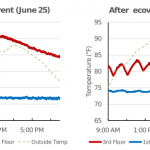 ecovent in Action
 We’ve come a long way. We thank you.
 Why Your Home Is 50 Percent Bigger Than Your Parents’