


It’s been a cooler than average summer up here in New England, but high temps elsewhere have pushed electric power consumption to record-setting levels. At the end of July, an Arizona heat wave sent electricity demand to a new record high. And on Tuesday, Orlando Utilities Commission set a new record for peak power demand, edging out the previous record set in 2007.
Although both utilities were able to manage the increased demand without a hitch, this is one record—like the record for biggest box office bomb—that no one wants to hold. (That dubious distinction is currently held by 47 Ronin, with a loss of ~$150 million. Ouch!)
So why isn’t a new peak great news? Just like a Hollywood flop, it can be costly. When power consumption rises to record high levels, utilities need to allocate new resources to meet the demand. Usually, that means increased expenses for consumers in the form of building new power plants or increasing new power purchases.
Fortunately, utilities are getting smarter about the way they manage demand for electricity. Through so-called “demand response” programs, they’re giving consumers incentives to use a little less power, which helps keep costs down. Sometimes information itself is enough of an incentive. For example, Orlando Utilities Commission is recommending that homeowners set their thermostat at 78 degrees or higher, about the same temperature of a typical Florida summer morning. By putting out these alerts, utilities are keeping customers comfortable—and avoiding blackouts.
With proper information and planning, utilities have shown they can manage peak demand without breaking a sweat. Or, as Ted Geisler, Arizona Public Service director of power operations, described it during the July heat wave, “We’ve been planning all year for a day just like today.”
 Meet Our Team: Rob Kim, Co-op extraordinaire
 We’re Cleantech Open Finalists!
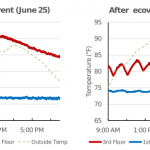 ecovent in Action
 We’ve come a long way. We thank you.
 Why Your Home Is 50 Percent Bigger Than Your Parents’