
Tag Archives: home automation

How To Stay Comfortable (And Inspired) In Your Home Office

Working from home is big, and it’s growing.

Between 2005 and 2012, the number of U.S. workers who telecommute increased by 80 percent. And Global Workplace Analytics reports that 4.6 percent of the U.S. workforce—more than 6 million people, including telecommuters and self-employed workers—consider home to be their primary workplace. That means U.S. homeowners are dedicating more square footage than ever to home offices.

Here are a few tips on how to stay comfortable (and inspired) in your home office.

Pick A Room With A (Well Lit) View

Few of us plan our homes around our offices. Instead, we usually pick a spot with some extra space, like a spare bedroom, or an unused portion of the attic or basement. But there’s good reason to put a bit of planning into the room we choose for an office. Pay particular attention to natural lighting. It makes a big impact.

A 2013 study published in the journal SLEEP concluded that there is a strong relationship between workplace daylight exposure and office workers’ sleep, activity and quality of life. Workers with windows in the workplace slept an average of 46 minutes more per night and reported higher scores on quality of life measures related to physical problems and vitality, as compared to workers without windows.

More Separation, Less Anxiety

Beyond lighting, simply the physical separation of work and leisure space can lead to a happier, more restful life outside the office. When a home office is too close to where we sleep, for example, the temptation to work late hours can be detrimental to our health. A recent study conducted in Sweden indicated that regular, late-night computer use was associated with sleep disorders, stress and depressive symptoms in both men and women.

Some telecommuters who want to separate work and play go as far as constructing their own tiny office in the backyard. (Check out this great post on Lifehacker for an example.) But even if your office just down the hallway, it’s best to keep work and relaxation separate.

Set The Climate For Productivity

Temperature also has a big impact on productivity. So is it better to be warmer or cooler?

Cornell University researchers conducted a study by adjusting the thermostat of an insurance office. When temperatures were set at 68 degrees, employees committed 44% more errors and were less than half as productive as when the office was set to stay at 77 degrees. The theory goes: When our body’s temperature drops, we use our energy to stay warm. That means we have less energy available for concentration, inspiration, and insight.

ecovent can help you dial in the perfect temperature for your workspace, without the need to heat or cool your other rooms. Sign up for our newsletter to be the first to know when it goes on sale.


Image credit: Jeremy Levine/Flickr
Our Homes Have More Devices Than Ever—But They Use Less Energy

How many electronic devices do you have in your home? If you’re like most Americans, you’ve got a growing collection of smartphones, flat screen TVs, laptops, e-readers and other electronic goodies crowding your outlets for charging space. And with the rise of the “Internet of Things,” the number of devices in your home is only going to grow.

The good news is, a growing number of devices doesn’t necessarily translate into an increase in home energy use. In fact, the opposite is possible. And now we have the numbers to prove it.

According to a recent study from the Consumer Electronics Association (CEA) and the Fraunhofer Center for Sustainable Energy Systems, the number of consumer electronics devices in use in the U.S. rose from 2.9 billion in 2010 to 3.8 billion in 2013. However, consumer electronics’ share of overall residential electricity consumption fell nine percent over the same period, from 13.2 percent in 2010 to just 12 percent in 2013.

In other words, American homes are more fun, convenient, and comfortable thanks to electronic devices, but all those consumer electronics aren’t turning our homes into energy hogs.

Or, as Ann Bailey, director of the ENERGY STAR Products Program, put it, “This is further evidence that American consumers don’t have to sacrifice to save energy and help protect the climate.”

As a consumer electronics company that cares about comfort, energy, and the climate, that’s music to our ears.

Image credit: Islxndis/Flickr. CC license.

Putting A Damper On Home Zoning

Image credit: Andy Melton/Flickr

When one room’s too hot and another is way too cold, it’s frustrating. Nobody wants to have to run to the thermostat every time they change rooms. But due to the pesky laws of thermodynamics, it’s still a challenge to get every room to the right temperature.

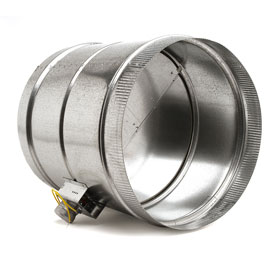
The key to comfort is to separate your home into different heating and cooling areas, or zones. Some zoning systems rely on dampers to balance out rooms that are too cold or too hot. But these systems can’t offer the comfort—or convenience—of ecovent. Here’s why.

Invasive Installation vs. Plug-And-Play

Damper

A damper valve

A damper system may help your home’s heating and cooling issues, but get ready to put some holes in your walls, floors, and ceilings to get it installed. Your home heating, ventilation, and air conditioning (HVAC) technician will have no other choice but to cut into your ductwork and anything around it to install your dampers. And even after that’s done, they’ll have to leave access panels in your ceiling to meet new building codes, like these. Now there’s a better way, for both you and your HVAC technician. With ecovent, there’s no hassle and no mess. Just drop in a new vent and you’re done.

Difficult Adjustments vs. Automatic Comfort

Dampers are great if your heating and cooling issues are consistent throughout the year. But what if the rooms that are freezing cold in winter are the same rooms that are way too hot in the summer? Unless your dampers are automated and motorized, they can’t automatically adjust to seasonal changes—or even differences in sun exposure over the course of the day. ecovent can. Because our system can sense the real temperature of every room, ecovent makes rooms the right temperature automatically.

Limited Control vs. Mobile Access

With a damper system, you still rely on a thermostat to adjust the temperature throughout your home. Even if your dampers are perfectly set, you can’t adjust on the fly when you change floors or rooms. With our mobile application, ecovent puts room-by-room temperature control in the palm of your hand. And because the system adapts and learns from your habits over time, you won’t have to think as much about changing temperatures from room-to-room.

We hate to put a damper on traditional home zoning, but there’s a reason we built ecovent to be easy, wireless, and automatic climate control.