Tag Archives: cooling

Before Air Conditioning, Nobody Worked During The Summer

OK, so that headline’s a bit of an exaggeration. But there’s no question that air conditioning fundamentally changed the way we live and work. According to Stan Cox, especially the way we work.

Cox’s book, Losing Our Cool, was recently written up in the Washington Post‘s Wonkblog, in an article called “How air conditioning transformed the U.S. economy.” If this excerpt is to be believed, it’s really pretty amazing.

Before air-conditioning, American life followed seasonal cycles determined by weather. Workers’ productivity declined in direct proportion to the heat and humidity outside — and on the hottest days employees left work early and businesses shut their doors. Stores and theaters also closed down, unable to comfortably accommodate large groups of people in stifling interiors. Cities emptied in summers…. Houses and office buildings were designed to enhance natural cooling, and people spent summer days and evenings on porches or fire escapes.

Air conditioning has helped us survive the sweltering summers, so it’s no wonder A/C installations are taking off like a rocket in the U.S. The number of U.S. homes with central A/C grew 25 percent from 2001 through 2009. And with more of us working at home, A/C helps us set the right temperature for productivity even when we’re outside the office.

The trick is to stay comfortable, while only cooling the space we use. That way, we can save some of the money we’re spending on energy and put it toward other, cooler uses. Like a bowler hat and monocle. Or at least a decent front porch.

Image credit: simpleinsomnia/Flickr. CC license.

Should I Run My Air Conditioning All Summer Long?

Lots of homeowners worry about running their air conditioner too long. They want to save energy, or they don’t want to cool rooms that don’t need it. So they only turn on the A/C when it’s really warm out.

That seems like common sense, but there are actually different schools of thought on this issue. In fact, some people worry about running the A/C too little. Why’s that?

For one, when your house is very warm, it takes a lot of energy for your air conditioner to cool it down. The surfaces of your home all store heat—from your roof, to your walls, to your windows. And the greater the temperature differential between indoors and outdoors, the longer the air conditioner has to run to reach the target temperature. So it’s reasonable to think that if you leave the A/C running at a consistent temperature, your system won’t have to work as hard to keep you cool.

That may be true in the short term, but it can create unexpected consequences in the long term.

One big issue is “short cycling.” If your home is always close to your target temperature, your A/C only needs to run for a few minutes to cool it to the proper level. That shorter cycle may be long enough to reach your target temperature, but it’s often not long enough to dehumidify the air. Too much humidity can make your home feel warmer than it actually is, so you may end up running to the thermostat to turn it down even lower.

Also, short cycling isn’t the most efficient way to run your air conditioner. Think of the impact on your gas milage when you drive your car in stop-and-go traffic versus cruising along on the highway. For maximum efficiency, you want your A/C to cruise, not crawl. It can also be noisy. Many homeowners find it irritating it is to hear their system constantly turning on and off.

So, should you run your A/C at the same temperature, all summer long?

We recommend the “cruise control” option. Run your A/C when you need it, and let your programmable thermostat handle it when you don’t. Ultimately, you will save energy—and money—by running your system fewer hours per year.

Image credit: Jeremy Levine/Flickr. CC license.

Zoning 101: What Is Zoning And Why Does It Matter?

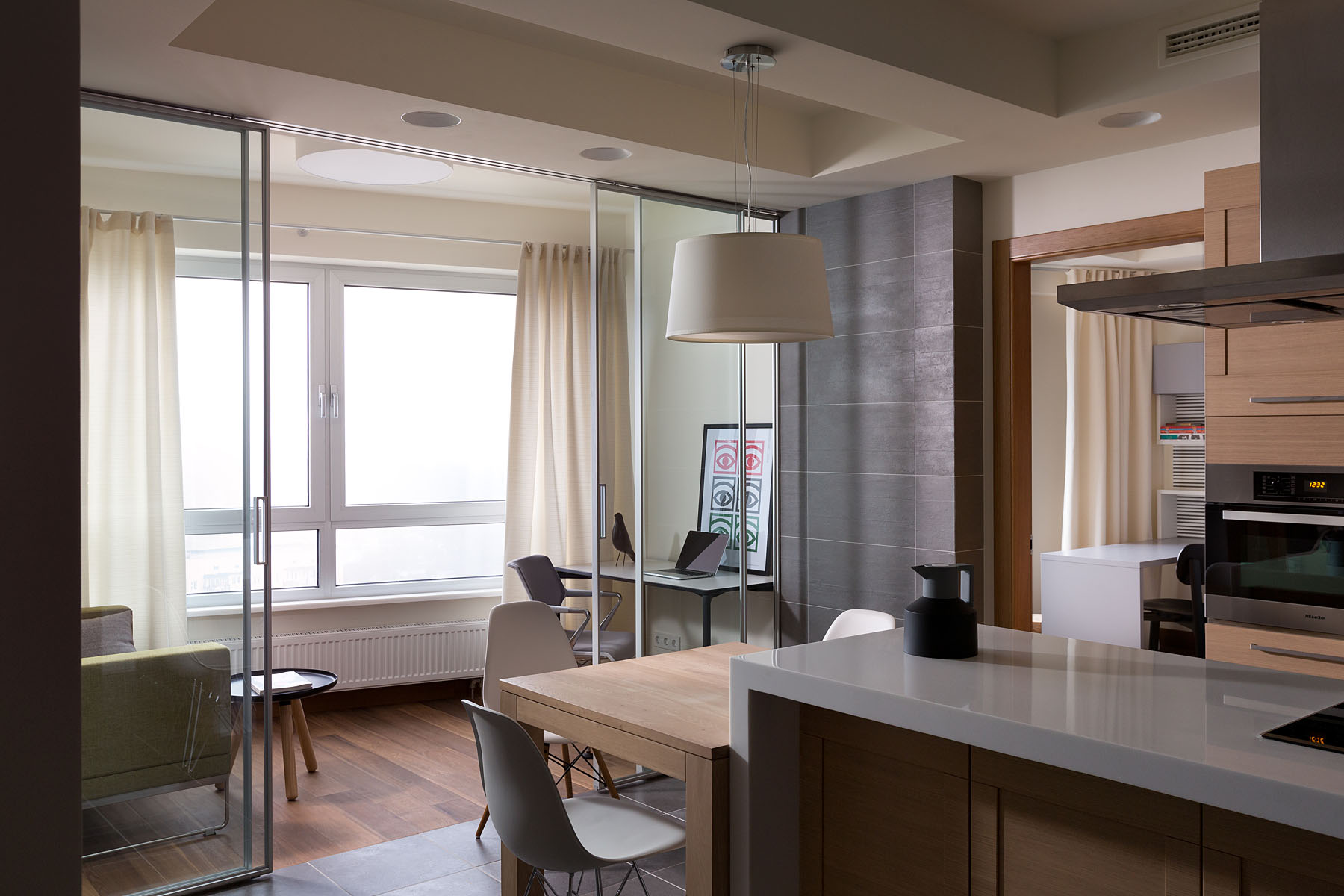
Modern KitchenEarlier this year, we wrote a post about why a single-zone heating, ventilation, and air conditioning (HVAC) system will never keep your home comfortable. These systems don’t have the dynamic monitoring and control of ecovent, so they’re bound to over-heat and over-cool parts of your home.

But when talking to our customers, we realized most people don’t even think about whether their homes have “zones” or not. They usually just know how many thermostats they have and whether or not their homes are comfortable.

So what is zoning and why does it matter?

Zoning is the practice of separating your home into different areas and heating and cooling those areas individually, rather than trying to condition the whole house at the same time. The best analogy we know comes from lighting. Think about it: You’d never build a home with only one light switch. Instead, you’ve got one in every room and you can set the level of lighting you want individually. But most homes have only one thermostat, which means that you’re probably heating and cooling space you don’t use.

Zoning offers a few important benefits:

Increased Comfort

When you separate your home into different zones, you can finally be comfortable. Think about the temperature difference between your first floor and your second floor. Zoning can alleviate that problem by setting different temperature targets for each level. Zoned systems can do the same thing for different areas on the same floor. Say you only need to cool one area of your house at a certain time of day—for example, when the sun shines on that side of the house. A zoned HVAC system helps you differentiate between those areas and dial in the right temperature.

If you install ecovent for your zoning system, you get an extra level of comfort control. Our system doesn’t care if your home has two zones or 15. You can set the right temperature at the room level, not just floor-by-floor.

Increased Control

In that sense, zoning is all about control. In most zoned systems, you get the benefit of additional thermostats, which each serve as a different point of control. But what if you could control your entire home from a mobile phone or tablet? With ecovent’s mobile app, you can. Even better, the system adjusts automatically to keep you comfortable, so you can worry less and enjoy more.

Saving Energy

Possibly the biggest benefit of a zoned HVAC system is the opportunity to save energy. A well-designed zoning system can save you hundreds of dollars in energy costs each year, and it reduces wear-and-tear on your system by reducing run-times for your furnace or A/C unit. Your home runs more efficiently when you only heat and cool the rooms that need it.

But Is Zoning Worth It?

Most zoning systems require a complicated installation that can take days to complete. And hiring a contractor to tear into your walls to install the necessary ducting and dampers can be expensive. And if anything else in your home changes, it can quickly get out of whack.

ecovent does zoning differently. We’ve designed wireless system that anyone can install in a matter of hours. And it makes every room of your home its own zone. To us, that’s the only kind of zoning that’s truly worth it—because it’s easy, it’s smart, and you can control your comfort from the palm of your hand.

Image credit: Mikhail Golub/Flickr. CC license.
