

By Scott Sawyer:
There’s a world of difference between a motorized vent and an intelligent zoning system. An intelligent zoning system requires more than just taking a vent and slapping in a motor, wireless chip and/or a temperature sensor. It requires the development of a system that accurately and scientifically monitors and controls airflow, temperature and other factors relevant to HVAC system dynamics. Yes, the Ecovent system includes vents with a motor, wireless chip and sensors. However, Ecovent is much more than just a motorized vent. It is an intelligent zoning solution consisting of a system of vents and room sensors that is able to deliver both comfort and safety through its ability to truly understand the home.
Motorized vents that aren’t part of an intelligent zoning system are dangerous. These other vents generally work by either pressing a button to open or close them or operate based on a schedule. However, blindly closing vents (regardless of whether they’re traditional manually operated or motorized) can irreparably damage your HVAC system. What happens to the safety of your HVAC system after you push that button is not an issue considered by other motorized vents. We have designed and engineered the Ecovent system to constantly monitor and respond to conditions in your HVAC system and to only close vents to the extent that’s safe. What you need is an integrated system.
So, let’s get into a little more detail about how exactly Ecovent monitors pressure, airflow and other HVAC system conditions and how we maximize both safety and comfort . . .
Each home is different, and Ecovent understands those differences.
Every forced air heating and/or cooling system has a few things in common. Air comes into the system from one or more rooms in your home through return vents and enters the “air handler”. The air handler is a device with a large fan that forces air (hence the forced-air name) through the rest of your system. From there, the air passes over a heat exchanger. The heat exchanger could be for cooling, heating, or both. It then flows through the network of ducts that distribute the conditioned air throughout your home.
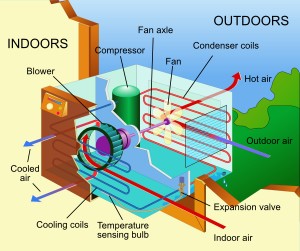
By Pbroks13 [CC BY 3.0 (http://creativecommons.org/licenses/by/3.0)], via Wikimedia Commons
These heating and cooling systems assume that every room in the home is the same, but the truth is that each room is different. Rooms with more windows will receive more heat from the sun than rooms with fewer windows. People and electrical devices create heat, which means occupied rooms will be hotter than unoccupied rooms. Hot air rises so rooms upstairs will be warmer than rooms downstairs.
These differences are exacerbated by the unfortunate reality that the majority of HVAC systems suffer from performance problems due to improper installation. In a widely-cited survey of Florida air conditioning contractors, less than 25% of contractors chose the size of air conditioning systems for homes according to the procedures prescribed by the Air Conditioning Contractor’s Association of America. Nearly 40% of contractors purposely installed oversized systems (air conditioners that were meant for much larger homes). Therefore, most air conditioners aren’t in the homes for which they were designed. Over-sized HVAC systems and their improper installation results in inefficient energy usage and unbalanced temperatures in the home.
Ecovent knows that each room in the home is different and responds to these differences. Ecovent understands each room because it constantly monitors the (a) airflow through each vent, (b) temperature of the supply air coming out of each vent, (c) temperature of each room, and (d) humidity of each room. Furthermore, we do this all extremely accurately – in order to get each room to the right temperature, our sensors are designed to measure the temperature of the room where people are located, not at the vents, which can be located at a number of places – the ceiling, the wall or the floor. We then run our sophisticated analytics using these sensor readings to learn how your rooms respond to different situations.
Airflow matters - your HVAC system needs to breathe.
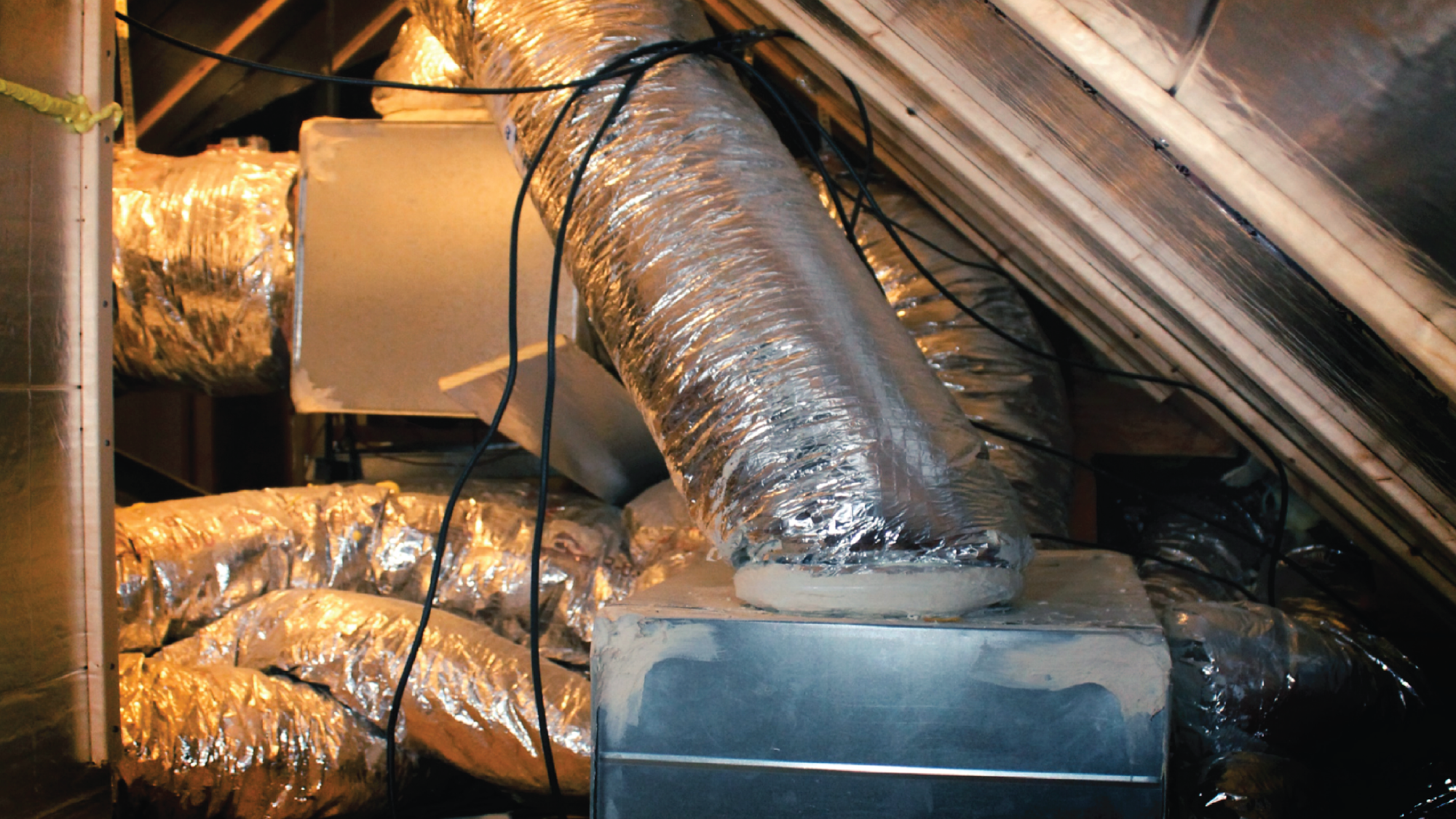
Your forced-air HVAC system needs adequate airflow to work properly. Significantly restricting airflow makes it harder for the fan in your air handler to push air and overworks the motor, causing it to fail prematurely. Proper airflow is required to keep your heat exchanger healthy as well. The condenser coil in your air conditioner can freeze without adequate airflow. Similarly, restricted airflow can cause your furnace to overheat. A well-installed and maintained furnace will simply shut itself down as a result of overheating and require a manual reset. However, an improperly installed or malfunctioning furnace can literally crack and release carbon monoxide and other dangerous gases into your home.
So, what causes restricted airflow? We’ve talked to a lot of HVAC contractors and they’ve seen many causes first hand. They cite improperly designed and installed systems, obstructed or pinched ducts, dirty filters, and in some cases, homeowners closing too many vents. This last one is obviously what we’re most sensitive about at Ecovent because our system relies on the ability to close vents in order to get each room to the right temperature. However, we can also monitor for the other issues and react to them as well. Unmonitored vent closures (either through standard vents or automated vents) can be dangerous, but the closure of vents in Ecovent’s integrated system, which dynamically monitors airflow and pressure, can optimize both safety and comfort.
What is Ecovent’s secret sauce for adequate airflow?
Recipe: One part design and one part dynamic and intelligent monitoring.
One Part Design
We completely reinvented the standard vent. Standard vents and makers of many other motorized vents have louvers and cross-slats (shown in the image below). This leads to turbulent and noisy air. This is why many louvered vents hiss and rattle. For more information on how we redesigned the traditional vent, please read our blog post here.
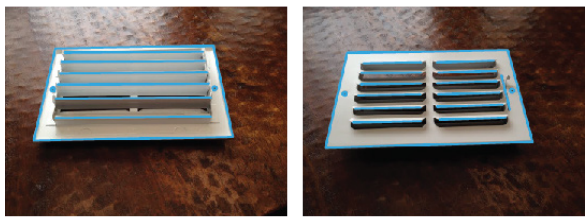
Edges that cause turbulence and noise are highlighted in blue.
Ecovent is designed without louvers and cross-slats and instead, uses smooth sweeping surfaces. Our smart vents allow for greater and more efficient airflow. This ultimately allows us to close more vents safely because restricted airflow caused by closed smart vents is offset by increased airflow from smart vents that are open.
One Part Dynamic and Intelligent Airflow Monitoring
So how many vents can you close? One? Two? Half of them? Is there even a rule of thumb? The truth is that makers of other automated vents want you to rely on their arbitrary guidelines to determine how many vents can be closed. However, when it comes to the comfort and safety of your home and your family, that’s simply not good enough for us. The problem is that because every home is different, there is no magic rule for how many vents can be closed safely. It takes a lot of data gathering, modeling and analysis to determine how many vents can be closed. That’s precisely what Ecovent does because we are highly focused on making sure that HVAC systems run safely and efficiently.
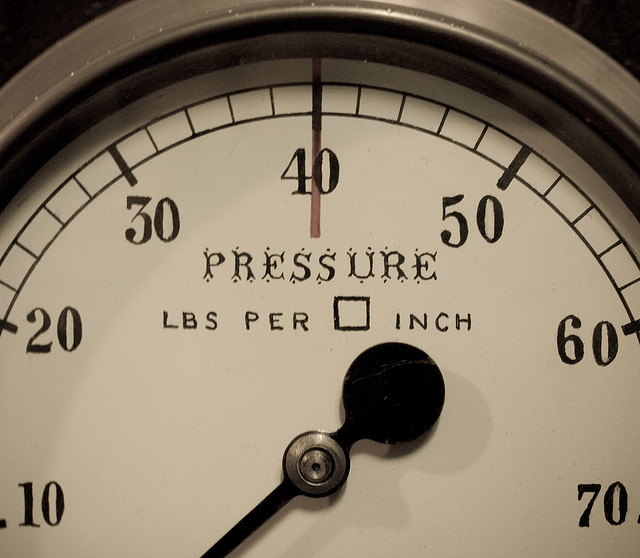
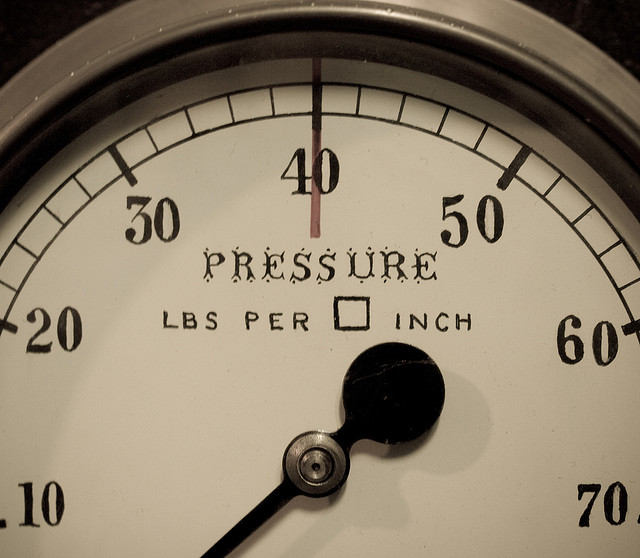
Ecovent determines how many vents can be closed for each individual home by monitoring airflow. In turn, Ecovent monitors airflow by understanding the temperature and pressure of every room. Other automated vents may attempt to monitor temperature and pressure but in a far less comprehensive manner. Monitoring pressure is complicated because some increases are dangerous and other increases are not. Ecovent understands the difference between pressure increases that lead to restricted airflow and pressure increases that do not.
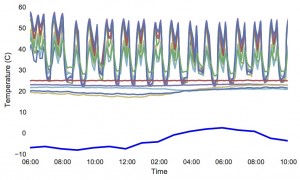
Ecovent fuses data from temperature, pressure and humidity sensors throughout the home to understand what the HVAC system is doing and how it’s performing.
The air pressure inside HVAC ducts and inside rooms in your home is always changing based on weather and other factors. For example, certain weather patterns cause a sharp rise in pressure. This is completely safe for your HVAC system and won’t affect airflow. Air wants to go from areas of higher pressure to areas of lower pressure. High pressure weather systems increase pressure both within your ducts and in your rooms, so airflow is not affected because there’s no change in relative pressure in your duct compared to in your rooms.
It’s the relative pressure difference that matters, not the absolute pressure within the duct. Automated vents that only measure pressure within the duct (but not outside the duct), can’t determine relative pressure. They don’t know whether a change in pressure is due to an innocuous weather system or a change in HVAC airflow. Ecovent has sensors both within the ducts and outside the ducts. Therefore, the system understands relative pressure and can detect the difference between dangerous pressure changes and innocuous pressure changes.
Don’t compromise on comfort and safety.
With other motorized vents, how many vents can you replace? With each added vent, you increase the risk of damaging your HVAC system. But if you only replace one or two vents, you can’t effectively control the temperature in each room. This is a dangerous trade-off between comfort and safety, and without Ecovent, you’ll fall short on both.
Achieving room-by-room temperature control requires a complete-home solution that automatically adjusts all of your vents in concert. To address rooms that you don’t use or that get too much airflow, you need to completely or partially close vents in those rooms. To address rooms that don’t get enough airflow (these are the rooms are always too cold in the winter or too hot in the summer), you need to close some vents in other rooms, so that more airflow gets redirected to the uncomfortable room. At the same time, you must constantly monitor the HVAC system for safety. You simply can’t redirect air like this if you only replace a few vents. Only Ecovent delivers comfort and safety by automatically monitoring and controlling airflow everywhere in your home.
 The difference between Wi-Fi, ZigBee, and Bluetooth
 Why we’re only as smart as our ancestors
 Not all Motorized Vents Are Equal – Safety Matters
 Meet our Team: Shawn Rose, aka “Bucky”, CIO
 When 67 degrees is not 67 degrees
 AHR Expo - HVAC Conference and Mariachi Concert
 It’s an honor just to be nominated (but we won!)